Published March 16, 2026
Living in Hyde Park: Old Austin Charm Meets Real Market Value

Living in Hyde Park: Old Austin Charm Meets Real Market Value
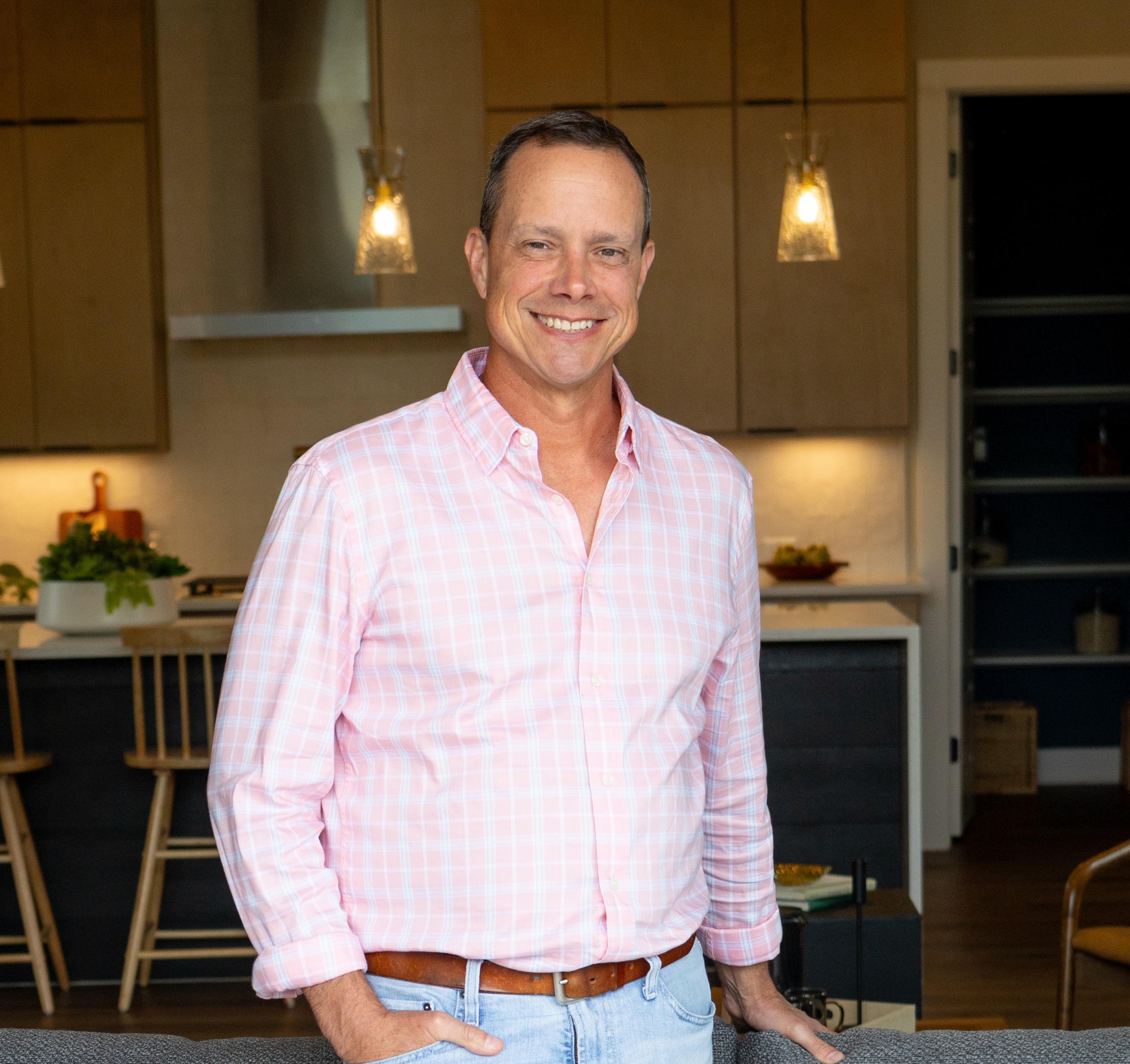
By Clay Byrne | Byrne Real Estate Group | Keller Williams | Austin, TX
If you've ever wondered what it feels like to live inside a postcard of Austin's past — tree-shaded streets, porch-front bungalows, coffee shops you can walk to at 7am — Hyde Park is the answer. And if you've been searching for a central Austin address that holds its value in a market that's been recalibrating since 2022, the data tells the same story: Hyde Park is one of the few neighborhoods in the city where scarcity, history, and walkability converge into a lasting premium.
At 809 E 38th St, you're sitting right at the neighborhood's southern boundary — steps from Shipe Park, three blocks from the UT campus edge, and close enough to Central Market that a grocery run becomes a five-minute walk. This article breaks down exactly what that location means in numbers, history, and lifestyle — and why the home itself is a perfect expression of what Hyde Park buyers are looking for right now.
The Home: A Cohesive, Designer Renovation in the Heart of Hyde Park
Before we get into the neighborhood data, it's worth talking about what sets 809 E 38th apart from a typical Hyde Park listing — because this is not a standard flipper spec job.
The renovation has a clear design language that runs consistently from the kitchen through the baths and into every bedroom: sage green, pink zellige tile, matte black hardware, and quartz throughout. That kind of intentional, room-to-room cohesion is rare at any price point.
Kitchen: The standout feature is the full-wall pink zellige tile backsplash — floor to ceiling — paired with sage green flat-front cabinetry, quartz marble countertops, undermount sink, and a full stainless appliance package including a gas range, built-in microwave, and dishwasher. This is a kitchen designed to be photographed, but also to be used.
Indoor/Outdoor Flow: Both the kitchen and the adjoining breakfast nook open directly through sliding glass doors to a covered back patio with a pergola-style canopy. The backyard is private, tree-lined, and fully grassed — rare for a central Austin lot. The nook itself is sun-drenched with warm light wood floors, purpose-built for a morning coffee routine you'll actually keep.
Bedrooms: The primary bedroom is spacious with hardwood flooring, windows on two walls, and enough room for a full furniture set. The secondary bedroom leans serene and airy — white walls, natural tones, ceiling fan — ideal for a guest room, home office, or nursery.
Bathrooms: The full bath is a complete renovation: floor-to-ceiling white zellige tile in the wet zone (same design DNA as the kitchen), a large black-framed vanity mirror, matte black fixtures, white quartz vanity top, and a full tub/shower combo with built-in niche. Clean, sharp, and timeless.
For Hyde Park's buyer pool — which skews toward design-literate professionals, UT faculty, and buyers who've been watching the neighborhood for years — this level of finish matters. It's priced into the premium, and it should be.
A Neighborhood That Predates the Car — By Design
Hyde Park is not just charming. It's historically significant. Established in 1891 by developer Monroe M. Shipe, Hyde Park is Austin's first platted suburb — built around a streetcar line that ran from downtown Austin into what was then a rural fringe. Shipe's vision was a self-sufficient community with mail delivery, street lighting, sanitation, and local commerce all baked in from day one.
The neighborhood's greatest building boom came between 1924 and 1935, which is why so much of what you see today — the Craftsman bungalows, the Tudor Revival cottages, the Queen Anne and Classical Revival holdovers — dates to that era. Approximately 75% of structures in Hyde Park are classified as "contributing" to the historic district, meaning any exterior changes require review by Austin's Historic Preservation Office. That's not red tape — that's what keeps the neighborhood looking the way it does while the rest of the city builds skyward.
In 1990, Hyde Park was listed on the National Register of Historic Places. In 2010, the Austin City Council officially designated most of it as a Local Historic District. The Hyde Park Neighborhood Association, which celebrated its 50th anniversary in 2024, remains one of the most active neighborhood organizations in the city.
The Walkability Numbers Are Real
"Is Hyde Park walkable?" It's one of the most-searched questions about Central Austin, and the scores back it up.
- Walk Score: 78 / 100 — 9th most walkable neighborhood in Austin
- Bike Score: 85 / 100 — Biker's paradise designation
- Transit: Multiple CapMetro routes + a free UT Shuttle stop within the neighborhood
That 78 Walk Score means most daily errands are achievable on foot. At 809 E 38th, you're specifically positioned to walk to:
- Shipe Park & Pool — 2 blocks (tennis, basketball, splash pad, playground)
- Quack's 43rd Street Bakery — a Hyde Park institution since the early 80s
- Hyde Park Bar & Grill — a community staple for over four decades
- Avenue B Grocery & Market — Austin's oldest continuously-operated grocery store
- Flightpath Coffeehouse, First Light Books, Tiny Grocer / Bureau de Poste — opened 2023 in the former post office at 43rd and Speedway
- Hancock Golf Course — the oldest golf course in Texas, a public par-35 just east of the neighborhood
- University of Texas at Austin — approximately 20 blocks, reachable by foot, bike, or the free UT Shuttle
For context: the broader Austin market scores far lower on walkability. Hyde Park's combination of dense street grid, local retail, and transit access is genuinely rare in a city built around the car.
Hyde Park Real Estate: What the Data Shows Right Now
Austin's overall market has been correcting since its 2022 peak. The median home price citywide sat at roughly $435,000 in December 2025, down 3.3% year-over-year, according to Unlock MLS and ABoR data. Days on market have stretched to 70+ days on average, and the close-to-list price ratio has slipped to 90.6% — meaning buyers have real negotiating room.
Hyde Park tells a more nuanced story:
| Metric | Data |
|---|---|
| Median Home Price | ~$750,000–$808,000 (Redfin / Homes.com, trailing 12 months) |
| Price Per Sq Ft | $390–$487 (78705 zip code, April 2025) |
| Avg Days on Market | 48–76 days (faster than Austin avg for hot homes) |
| Sale-to-List Ratio | ~90–98% (hot homes still close near asking) |
| Homes Sold Per Month | ~10 (tight, low-turnover inventory) |
| Zillow Typical Value | $767,791 (down ~10% YoY — aligned with broader Austin correction) |
The compression between Zillow's decline and Redfin's reported 10.6% year-over-year increase (December 2025) reflects how thin the data set is: with only 10 homes selling per month, a single outlier transaction can move the needle significantly. What the numbers agree on is that Hyde Park homes trade in the $650K–$850K range at a meaningful premium over the citywide median, driven by historic designation, walkability, school quality, and constrained supply.
The zip code data (78705) from April 2025 shows a "Pending < Sold" value of +2.3%, meaning pending prices are tracking slightly above recent closed sales — a sign of price stability rather than the softening seen in many other Austin zip codes.
Why Supply Stays Tight — And What That Means for Buyers
Hyde Park has a structural advantage that most Austin neighborhoods can't replicate: the historic designation limits demolition and radical redevelopment.
In a city where a 1950s ranch on a central lot often gets scraped for a three-story ADU stack, Hyde Park's Local Historic District rules create a meaningful floor on supply growth. You can't simply tear down a contributing structure and replace it with something bigger. Plans must be reviewed by the Historic Preservation Office and, for significant changes, by the Historic Landmark Commission.
The result: inventory turns over slowly, owners tend to hold for the long term, and new supply is limited. For buyers, that means fewer choices and less negotiating leverage than you'd find in a newer neighborhood — but also more confidence that what you're buying won't be surrounded by construction projects in five years.
For sellers: the protection cuts both ways. Your neighbor can't raze their 1928 bungalow and build a six-unit complex. That's a meaningful part of what you're pricing into the neighborhood.
Schools: A Real Differentiator
School quality is often cited as a driver of residential premium, and Hyde Park delivers. Homes in the neighborhood are served by Austin ISD's Russell Lee Elementary (A-minus rated), Kealing Middle School (A rated, magnet program), and McCallum High School (A rated).
McCallum is home to the McCallum Fine Arts Academy, recognized by the Grammy Foundation in 2015. Its band program won the Texas Bandmasters Association Exemplary High School Band designation in 2024, and Niche ranks it among the top 10 high schools for the arts in Texas out of 113 schools statewide.
For families who factor school quality into a purchasing decision — and most do — Hyde Park is one of a small number of central Austin neighborhoods where you get walkability, historic character, and strong public school assignments in the same package.
Who Lives Here — and Who Keeps Moving In
Hyde Park has a population of approximately 6,700 residents. The mix is genuinely varied: graduate students and UT faculty drawn by the Shuttle stop and proximity to campus, long-term owners who bought decades ago and have no intention of leaving, and young professionals and families who value walkability and the neighborhood's human scale.
Niche rates Hyde Park as one of the best places to live in Texas, and one data point that often surprises buyers: its CAP Index Crime Score is 1 out of 10 — significantly below the national average of 4.
One nuance worth knowing: Hyde Park skews toward renters. The density of smaller apartment buildings alongside single-family homes means a sizable portion of the population rents rather than owns. Owners, as one local Realtor put it, "have mostly lived in the neighborhood for a while." That ownership stability is part of the community's DNA.
Putting It Together: What 809 E 38th St Actually Represents
A home at 809 E 38th St sits at the intersection of everything Hyde Park offers — right at the southern edge of the neighborhood, the most walkable section, closest to:
- The UT campus (under 1 mile)
- Shipe Park & Pool — the neighborhood's main green space
- The dining and café corridor along 43rd Street and Avenue B
- Central Market — one of Austin's premier specialty grocers
- I-35 and MoPac access — Hyde Park is tucked between both major corridors, making the rest of the city quickly accessible when you need it
And unlike most homes in this price range, 809 E 38th comes fully renovated with a designer finish level that speaks directly to what Hyde Park buyers are hunting for: a home that's been done right, in a neighborhood that isn't going anywhere. The sage-and-pink kitchen, the zellige tile baths, the covered patio opening to a private backyard — these aren't cosmetic upgrades. They're the kind of finishes that hold their value because they were chosen with intention, not speed.
In a market where Austin's broader median has softened to ~$435,000 and days on market have climbed past 70, Hyde Park properties continue to command $750K+ because they offer something increasingly rare in a high-growth Sun Belt city: a walkable, historically protected, school-quality neighborhood with genuine community identity — and a finite number of homes inside it.
Thinking About Hyde Park?
Whether you're a buyer looking to understand what you're really getting for the premium, or a seller trying to position your home against the broader Austin correction, the Hyde Park story is one of scarcity, history, and sustained demand. It doesn't track the city — it leads it.
At Byrne Real Estate Group, we work Central Austin neighborhoods including Hyde Park, Rosedale, Hancock, and Travis Heights with the same depth of market knowledge you'd expect from a team with 20+ years of combined real estate and mortgage experience. If 809 E 38th St or any Hyde Park property is on your radar, let's talk.
Clay Byrne | Byrne Real Estate Group | Keller Williams Realty (512) 942-7880 | Clay@Byrne-Austin.com | 3355 Bee Caves Rd Suite 301B, Austin, TX